‘Viewpoint’
Project 1 – ‘The Distance Between Us’
Exercise 5.1 – The Distance Between Us
Brief
Use your camera as a measuring device. This doesn’t refer to the distance scale on the focus ring. Rather, find a subject that you have an empathy with and take a sequence of shots to ‘explore the distance between you’. Add the sequence to your learning log, indicating which is your ‘select’ – your best shot.
When you review the set to decide upon a ‘select’, don’t evaluate the shots just according to the idea you had when you took the photographs; instead evaluate it by what you discover within the frame (you’ve already done this in Exercise 1.4). In other words, be open to the unexpected. In conversation with the author, the photographer Alexia Clorinda expressed this idea in the following way:
Look critically at the work you did by including what you didn’t mean to do. Include the mistake, or your unconscious, or whatever you want to call it, and analyse it not from the point of view of your intention, but because it is there.
(Bloomfield, 2018)
Initial Response
At first, I wasn’t too sure on what the brief meant. But there more I studied it and looked at the example work provided, I then realised what I was supposed to do, and was baffled how it took me so long to work out. I like the idea of the brief and how it could end up an interesting one. I have had a few ideas for it and think this shoot will be cracking if I can capture the way I intend it to.
Mind Map
Click the link to view the mind map.
Shoot Plan
For this shoot, I will be using my dogs. Letting them play inside and out, and chilling naturally. I am going to try many different angles and distances to see what works best between us. I will be using a variety of settings also to determine what works well and what doesn’t and experiment.
Contact Sheet
To view my contact sheet for this shoot, click the link.
Shoot
Image 1
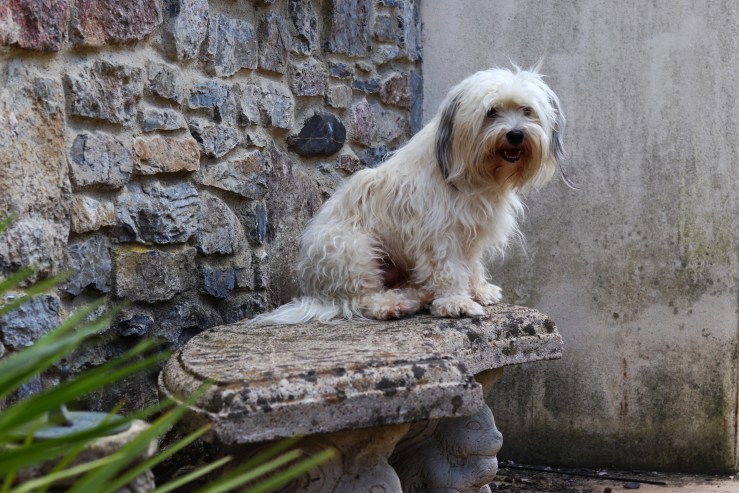
Aperture, ISO, Shutter Speed
Image 1 –
Aperture: 5.6
ISO: 100
Shutter Speed: 1/100
Annotation
Please click the link to view the annotation.
Reflection
This exercise was very challenging but I felt I did rather well and completed what the brief wanted. However, I am not sure that in my annotations and selection process I was very clear on my thinking and how it came to that image and about the framing.
Demonstration of Technical and Visual Skills
In terms of techniques, I used a subject that I was familiar with and that I would enjoy shooting and just let them free roam. I got in various angles and used my observation skills to pin point them and take the shot. I was not concerned about the location and surroundings but solely focused on the subject and making sure I captured the distance between us. There was not so much a visual awareness in terms of framing, but a visual awareness of how close I was to the subject and how they would come out in the images. Therefore, throughout the shoot I was not interested in composition.
Quality of Outcome
I feel some of my images were strong and others weak. But that’s how it goes in a shoot. I applied my knowledge and research and presented my work in a manner which is easy to follow and read. The content was bulky as I was trying to analyse my images and talk about them. My communication of ideas could have been better as I knew what I wanted to do for the shoot, but found it harder to put it into words, afterwards talking specifically about the exercise and how it is relatable to my shoot. I feel I judged the shot well by the framing, and how he was postured.
Demonstration of Creativity
I used my imagination and experimented with the shoot by using various settings and locations throughout to capture the dogs. I just set my camera to the relevant settings and just shot a number of images, not worrying about framing but how the dog was captured. To then observe the frame after to see how it all came together.
Context
I feel my research was very strong throughout the shoot and clearly showed what I was working towards, my thinking behind the shoot led me to having fun and doing what I intended with my subject. When reflecting I have stated where ideas have come from and how I have developed the exercise throughout.
Exercise 5.2 – Homage
Brief
Select an image by any photographer of your choice and take a photograph in response
to it. You can respond in any way you like to the whole image or to just a part of it, but you must make explicit in your notes what it is that you’re responding to. Is it a stylistic device such as John Davies’ high viewpoint, or Chris Steele Perkins’ juxtapositions? Is it an idea, such as the decisive moment? Is it an approach, such as intention – creating a fully authored image rather than discovering the world through the viewfinder?
Add the original photograph together with your response to your learning log. Which of the three types of information discussed by Barrett provides the context in this case? Take your time over writing your response because you’ll submit the relevant part of your learning log as part of Assignment Five.
You may already have taken some homage photography where you’ve not tried to hide the original inspiration but rather celebrated it. Refer back to your personal archive and add one or two to your learning log together with a short caption to provide a context for the shot.
(Bloomfield, 2018)
Initial Response
To have the freedom of selecting any photographer and to respond to their photo by making your own creation seems very fun and I have a few ideas in mind in order to fulfil the brief. I feel talking about the context of the image will be hard, but manageable. I am not sure if I have any archive but I might do. I have done a lot of photography since starting out.
Mind Map
Click on the link below to view the mind map for this shoot.
Shoot Plan
For this shoot, I will be taking the idea of texture, from a series of texture photographs and will be conducting my own shoot in relation as a response to the artists photographs. I will then write up my selected image talking about context mainly as that is what the shoot is all about. My shoot will be conducted of different textures throughout a typical household.
Contact Sheet
For my contact sheet, click the link. This also includes the write up.
Shoot
Image 1
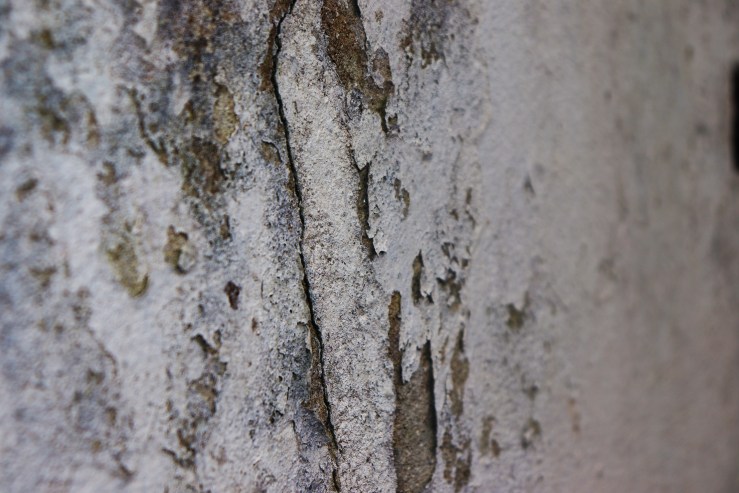
The Divide
Annotation
Click the link for annotations.
Aperture, ISO, Shutter Speed
Image 1 –
Aperture: 5.6
ISO: 100
Shutter Speed: 1/200
Reflection
This was probably the toughest of the exercises so far, as soon as I thought I understood the exercise, I then doubted myself and what I was writing. In the end, I just went for it, and tried my hardest with what I understood it to be. I understand context, but with the internal, external and original, it just made it complicated when trying to write about them within my work, relating to my work.
Demonstration of Technical and Visual Skills
For this exercise, I started by using my 55-250mm as I thought I could zoom in on things that were really far away and would still look good through the viewfinder, but it didn’t work as well as I wanted it to. I then adapted and changed to my 18-55. I also started shooting indoors, then changed to outdoors, to explore more possibilities. For this exercise I used various materials and techniques to help get the desired effect. Including using the wall, my camera, and shooting on Manuel mode with a small aperture to blur the surroundings to focus on my subject. I observed the wall, the best place to shoot it and at what angle. I also observed my images to make a selection choice and I observed other artists work in order to create what I wanted to in connection with the brief. I was visually aware of what was in the frame and how this could affect the image. This also helped with the design and my composition, setting me up for the shoot.
Quality of Outcome
I am pleased with the quality of the outcome of this exercise. I was not sure at first but I gave it my all and I have managed to complete it feeling positive. I tried applying my knowledge as per usual and presented my work in a way that is laid out to be read and understood easily. I feel I judged well on the best select and communicated my ideas to the point in which my learning and my skills are both evident in my work through my annotations and analysis of my work.
Demonstration of Creativity
I have tried to choose a subject for the shoot that was challenging and not the most basic, straight forward thing I could think of in relation to the shoot. Texture was a tricky one, not to capture but to talk about and to explain my reasoning.
Context
My research was relevant and my reflection was key. Talking about the context of my images however seemed harder than expected but overall I showed critical thinking throughout the exercise. Context looks easy on the surface, but once you start to segment it, it gets much more complex in relation to photography.
Overall, I feel I have tried my hardest to produce work that fulfils the brief and that explains context of my image and using the relevant framework shows I can understand and talk about it throughout my work.
Homage
At the bottom of the brief it talks about homage and selecting one or two from personal archive. I thought I didn’t have any, although I managed to find one which I did back when I was at school of Elliot Erwitt’s famous dog collection, as you can see from below, I was inspired!
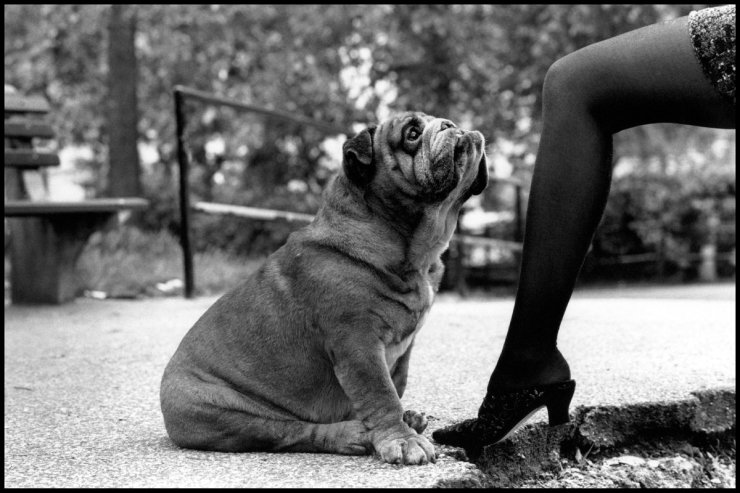
Fig. 37. Magnum Photos. 2018, Bulldog looking up at leg. New York City, USA (1989)
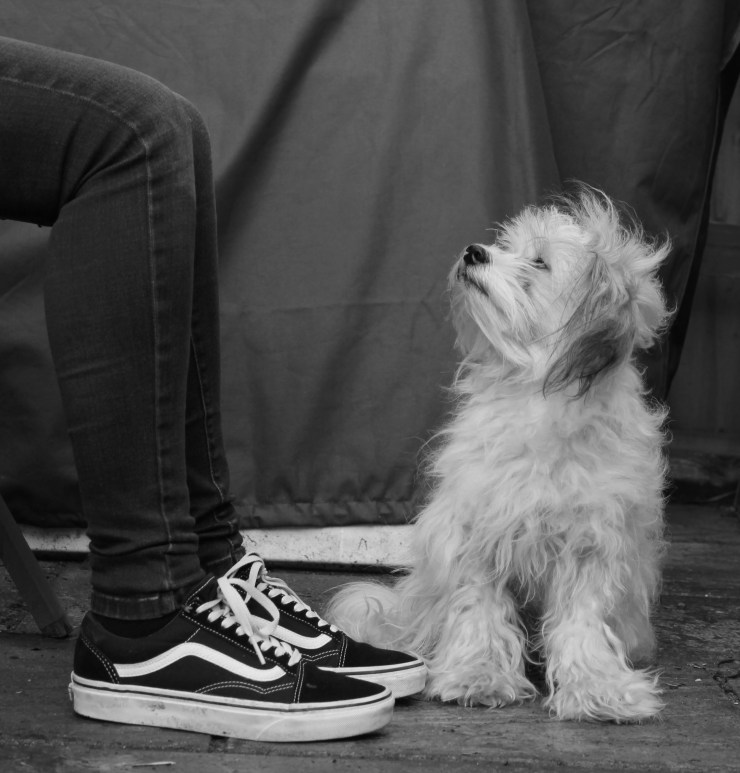
Fig. 38. (s.n) (s.d.)
Aperture, ISO, Shutter Speed
Image 1 –
Aperture: 5
ISO: 100
Shutter Speed: 1/160
© Lewis.Gibson.Photography.2019
 Gibsonphotography